Washington State: Classroom Based Assessment(CBA)
Links to Primary Documents at the National Archives and Records Administration, Pacific Alaska Region (Seattle)
10th-11th Grade
Cultural Interactions (History, Geography)
Student assignment:
In a persuasive paper or presentation, you will:
- Select a contemporary or historical cultural group that has emigrated or has been resettled in two different parts of a country or the world (e.g., Vietnamese, Senegalese, British, Greeks, Bosnians, indigenous groups from all around the world).
- Compare and contrast the cultural group's current economic success in each region/country with similarities and differences.
- Compare and contrast the cultural group's current political status in each region/country with similarities and differences.
- Compare and contrast the current social conditions affecting the cultural groups in each region/country with similarities and differences.
- Present a position/thesis discussing in which region the cultural group fares better that:
- is clear,
- outlines social, economic and political reasons, and
- includes a general statement about why groups fare better in different regions.
Primary source documents from "Our Documents, 100 Milestone Source Documents from the National Archives and Records Administration," relating to this Classroom Based Assessment [CBA]:
Important notes for using this section:
- Following each sub-topic is a list representing specific documents that are believed to best illustrate a topic. Each document is linked to an interactive digital copy of the record itself, complete with description, background information and teaching suggestions, from the "Our Documents" web site www.ourdocuments.gov. The transcribed copy is for your convenience and for students having difficulty reading handwriting. All pages can be easily downloaded and/or printed. Just click on the document title and it will take you to the specific "Our Documents" page.
Sample Topics and Associated Primary Sources:
United States - Native Populations Who Migrated or Were Forced to Migrate
- President Andrew Jackson's Message to Congress 'On Indian Removal' (1830)
- Check for the Purchase of Alaska (1868)
- Treaty of Fort Laramie (1868)
- Dawes Act (1887)
- Joint Resolution to Provide for Annexing the Hawaiian Islands to the United States (1898)
United States - Japanese Internment During World War II
United States - Chinese Exclusion
United States - North (industrial) vs. South (agricultural)
- Patent for Cotton Gin (1794)
- Louisiana Purchase Treaty (1803)
- McCulloch v Maryland (1819)
- Missouri Compromise (1820)
- Treaty of Guadalupe Hidalgo (1848)
- Compromise of 1850 (1850)
- Kansas-Nebraska Act (1854)
- Dred Scott v Sanford (1857)
- Telegram Announcing the Surrender of Fort Sumter (1861)
- Homestead Act (1862)
- Pacific Railway Act (1862)
- Emancipation Proclamation (1863)
- War Department General Order 143: Creation of the U.S. Colored Troops (1863)
- Gettysburg Address (1863)
- Wade-Davis Bill (1864)
- President Abraham Lincoln's Second Inaugural Address (1865)
- Articles of Agreement Relating to the Surrender of the Army of Northern Virginia (1865)
- 13th Amendment to the U.S. Constitution: Abolition of Slavery (1865)
- 14th Amendment to the U.S. Constitution: Civil Rights (1868)
- 15th Amendment to the U.S. Constitution: Voting Rights (1870)
- Keating-Owen Child Labor Act of 1916 (1916)
- Boulder Canyon Project Act (1928)
- Tennessee Valley Authority Act (1933)
- National Industrial Recovery Act (1933)
- National Labor Relations Act (1935)
- Executive Order 8802: Prohibition of Discrimination in the Defense Industry (1941)
- Brown v Board of Education (1954)
- National Interstate and Defense Highways Act (1956)
- Executive Order 10730: Desegregation of Central High School (1957)
- President John F. Kennedy's Inaugural Address (1961)
- Official Program for the March on Washington (1963)
- Civil Rights Act (1964)
- Voting Rights Act (1965)
Associated Washington State Standards {EALR}
- Economics 2.2.3c: Evaluate how the characteristics of economic systems may advantage or disadvantage a particular group of people.
- Geography 1.2.3a: Explain why different places of the world have particular physical and human characteristics.
- Social Studies Inquiry and Information Skills 1.1.2f: Creates a product that uses social studies content to support findings; present product in an appropriate manner to a meaningful audience.
Scoring
| EALR | Scoring (*for additional levels, see OSPI Scoring Rubric) |
|---|---|
| Economics 2.2.3c | *at highest level... Compares and contrasts the cultural group's economic success in each region/country with at least two similarities and differences clearly and accurately explained and supported by specific information (at least one similarity and one difference). |
| Geography 1.2.3a | * at highest level.... Compares and contrasts the cultural group's political status in each region/country with at least two similarities and differences clearly and accurately explained and supported by specific information (at least one similarity and one difference). AND Compares and contrasts the social conditions affecting the cultural groups in each region/country with at least two similarities and differences clearly and accurately explained and supported by specific information (at least one similarity and one difference). |
| Social Studies Inquiry and Information Skills 1.1.2f | *at highest level... Presents a position/thesis discussing in which region the cultural group fares better that
|
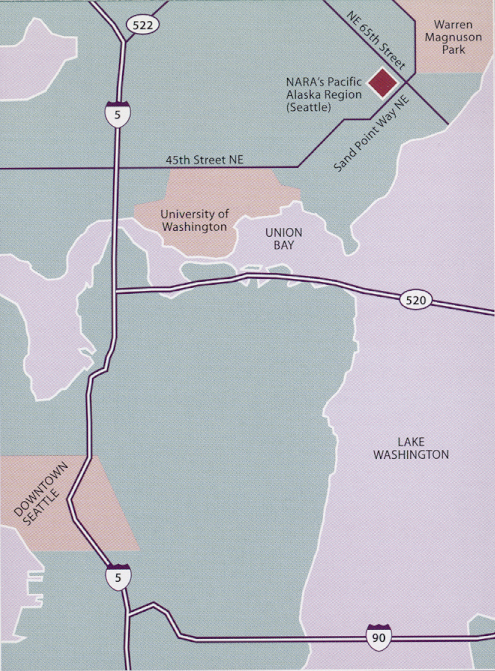
National Archives and Records Administration
6125 Sand Point Way NE
Seattle, WA 98115