Washington State: Classroom Based Assessment(CBA)
Links to Primary Documents at the National Archives and Records Administration
10th-11th Grade
Checks and Balances (Civics)
Student assignment:
In a persuasive paper or presentation, you will:
- select a U.S. foreign policy and analyze why it was created,
- explain the costs and/or benefits of this foreign policy to other nations with specific examples,
- explain the costs and/or benefits of this foreign policy to stakeholders in the United States with specific examples, and
- develop a position on the overall effectiveness of the foreign policy with well-supported reasons.
Primary source documents from "Our Documents, 100 Milestone Source Documents from the National Archives and Records Administration," relating to this Classroom Based Assessment [CBA]:
Important notes for using this section:
- Following each sub-topic is a list representing specific documents that are believed to best illustrate a topic. Each document is linked to an interactive digital copy of the record itself, complete with description, background information and teaching suggestions, from the "Our Documents" web site www.ourdocuments.gov. The transcribed copy is for your convenience and for students having difficulty reading handwriting. All pages can be easily downloaded and/or printed. Just click on the document title and it will take you to the specific "Our Documents" page.
Sample Topics and Associated Primary Sources:
United Nations
Treaties
- Treaty of Paris (1783)
- Louisiana Purchase Treaty (1803)
- Treaty of Ghent (1814)
- Treaty of Guadalupe Hidalgo (1848)
- Check for the Purchase of Alaska (1868)
- Surrender of Japan (1945)
International Policy
- Monroe Doctrine (1823)
- Theodore Roosevelt's Corollary to the Monroe Doctrine (1905)
- Truman Doctrine (1947)
- Marshall Plan (1948)
Other National and International Events and Documents
- Declaration of Independence (1776)
- Lee Resolution (1776)
- Treaty of Alliance with France (1778)
- Jefferson's Secret Message to Congress Regarding the Lewis & Clark Expedition (1803)
- Joint Address to Congress Leading to a Declaration of War Against Germany (1917)
- Zimmermann Telegram (1917)
- President Woodrow Wilson's 14 Points (1918)
- Joint Address to Congress Leading to a Declaration of War Against Japan (1941)
- Lend-Lease Act (1941)
- General Dwight D. Eisenhower's Order of the Day (1944)
- Surrender of Germany (1945)
- Press Release Announcing U.S. Recognition of Israel (1948)
- Armistice Agreement for the Restoration of the South Korean State (1953)
- President Dwight D. Eisenhower's Farewell Address (1961)
- Aerial Photograph of Missiles in Cuba (1962)
- Nuclear Test Ban Treaty (1963)
Associated Washington State Standards {EALR}
- Civics 3.2.3a: Explain how conditions and motivations affect the development of foreign policy.
- Civics 3.1.3a: Evaluate how national interests are maintained through international agreements, treaties, and alliances.
- Civics 3.1.3b: Analyze the relationships and tensions between national interests and international issues.
- Civics 3.2.3b: Evaluate foreign policy decisions and how they affect nations.
- Economics 1.1.3c: Analyze how choices made by groups and individuals can impose costs on others.
- Social Studies Skills 3.1.4c: Compare benefits and costs, suggest logical alternatives, predict probable consequences, and provide evidence to justify best solution.
- Inquiry and Information Skills 1.1.3f: Create a product that uses social studies content to support findings; present product in an appropriate manner to a meaningful audience.
- Social Studies Skills 1.1.3d: Evaluate reliability, credibility, and validity of information from a variety of social studies sources.
Scoring
EALR Scoring
(*for additional levels, see OSPI Scoring Rubric)Civics 3.2.3a
Civics 3.1.3a
Civics 3.1.3b*at highest level... Clearly and accurately analyzes why the chosen foreign policy was implemented with three or more reasons explicitly supported by relevant evidence. Analysis includes some discussion of national and/or international interests Civics 3.2.3b *at highest level... Clearly and accurately evaluates how the chosen foreign policy affects other nations with three or more specific examples explicitly supported by relevant evidence. Economics 1.1.3c
Social Studies Skills 3.1.4c*at highest level... Clearly and accurately evaluates how the chosen foreign policy imposed costs AND provided benefits for various stakeholders in the United States, with three or more specific examples of costs and benefits. Inquiry and Information Skills 1.1.3f *at highest level... Presents a clearly stated position on the effectiveness of the chosen foreign policy with three or more reasons explicitly supported by accurate evidence. These reasons may be inferred from the discussion of the causes and effects of the chosen foreign policy. Social Studies Skills 1.1.3d *at highest level... Annotated bibliography includes a variety of resources from multiple perspectives. Annotations discuss reliability and credibility and show validity through comparison of resources. Annotations include the information that was useful to the development of your research.
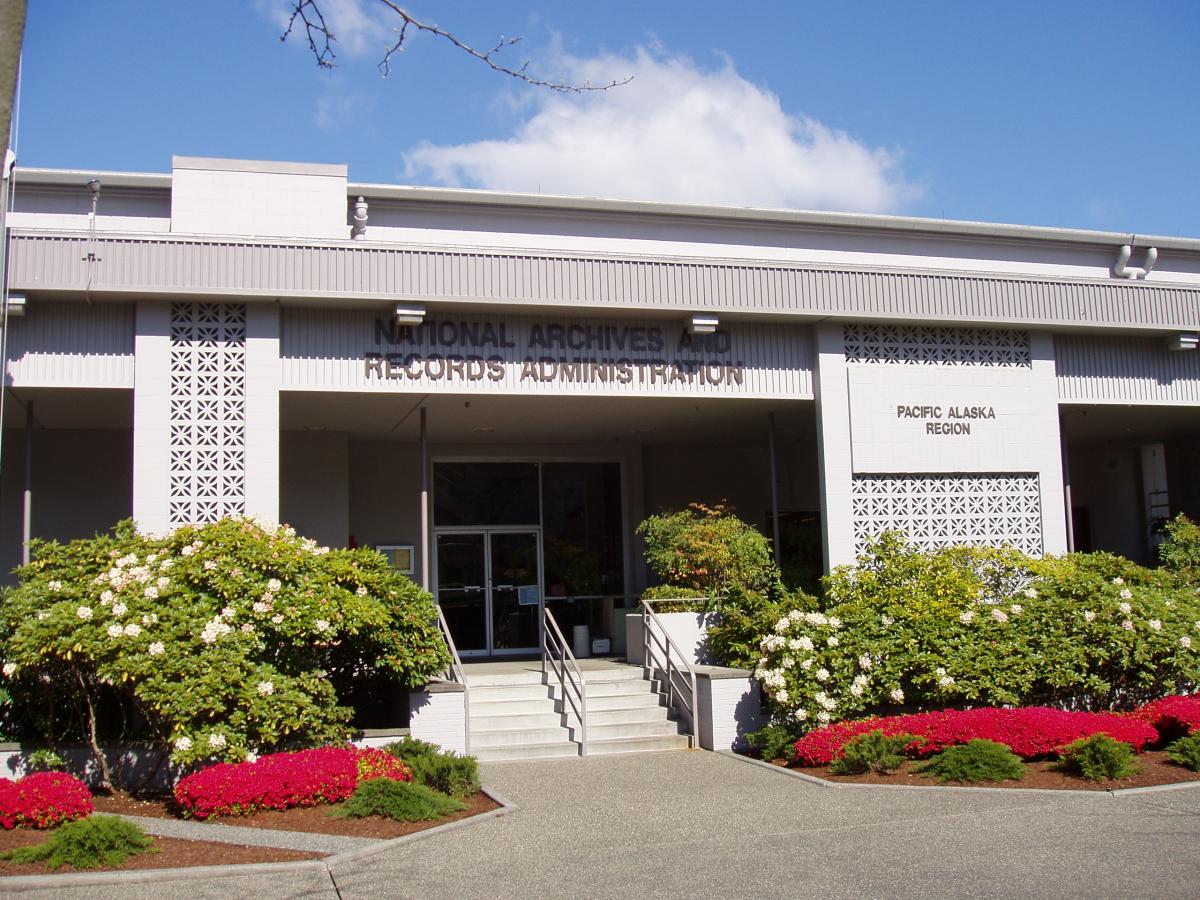
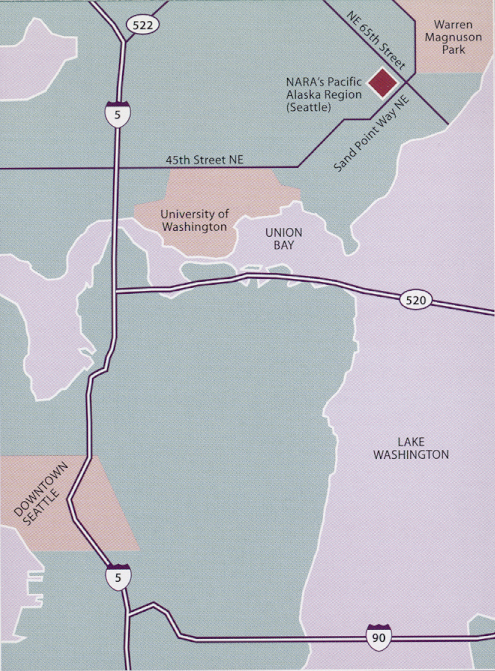
National Archives and Records Administration
6125 Sand Point Way NE
Seattle, WA 98115