Washington State: Classroom Based Assessment(CBA)
Links to the National Archives and Records Administration's Primary Documents located at www.ourdocuments.gov
8th Grade
Meeting Needs and Wants (Economics)
Student assignment:
In a persuasive paper or presentation, you will:- Describe examples of how two societies have met their needs and wants.
- Explain how both societies' rights, values, and/or beliefs have affected their economic choices.
- Compare and contrast the two groups' economic choices with specific similarities and differences.
- Show a thorough understanding of opportunity cost through your explanation and analysis.
Primary source documents from "Our Documents, 100 Milestone Source Documents from the National Archives and Records Administration," relating to this Classroom Based Assessment [CBA]:
Important notes for using this section:
- Following each sub-topic is a list representing specific documents that are believed to best illustrate a topic. Each document is linked to an interactive digital copy of the record itself, complete with description, background information and teaching suggestions, from the "Our Documents" web site www.ourdocuments.gov. The transcribed copy is for your convenience and for students having difficulty reading handwriting. All pages can be easily downloaded and/or printed. Just click on the document title and it will take you to the specific "Our Documents" page.
Sample Topics and Associated Primary Sources:
United States Economic Principles and Development
Anti-Monopoly Movement Effects of US Tariffs Expansion of Territory- Northwest Ordinance (1787)
- Louisiana Purchase Treaty (1803)
- Treaty of Guadalupe Hidalgo (1848)
- Check for the Purchase of Alaska (1868)
- Joint Resolution to Provide for Annexing the Hawaiian Islands to the United States (1898)
- Pendleton Act (1883)
- Keating-Owen Child Labor Act of 1916 (1916)
- National Labor Relations Act (1935)
- Executive Order 8802: Prohibition of Discrimination in the Defense Industry (1941)
- Morrill Act (1862)
- Boulder Canyon Project Act (1928)
- Tennessee Valley Authority Act (1933)
- Social Security Act (1935)
- President Franklin Roosevelt's Radio Address Unveiling the Second Half of the New Deal (1936)
- Servicemen's Readjustment Act (1944)
- Executive Order 10924: Establishment of the Peace Corps. (1961)
- Social Security Act Amendments (1965)
- Act Establishing Yellowstone National Park (1872)
- President Andrew Jackson's Message to Congress 'On Indian Removal' (1830)
- Homestead Act (1862)
- Pacific Railway Act (1862)
- Interstate Commerce Act (1887)
- Dawes Act (1887)
- National Interstate and Defense Highways Act (1956)
- 16th Amendment to the U.S. Constitution: Federal Income Tax (1913)
- President Franklin Roosevelt's Annual Message (Four Freedoms) to Congress (1941)
Associated Washington State Standards {EALR}
- Economics 1.1.2a - Provide examples of how groups and individuals face choices and consider price and personal values, etc., in making choices in present and in historical situations (opportunity cost).
- Economics 2.2.2a - Understand how differences in property rights, ownership and non-economic values and beliefs result in different methods of production and distribution of goods and services.
- Social Studies Inquiry and Information Skills 3.1.3a - Identify the central issue; formulate appropriate questions; identify multiple perspectives; compare and contrast; validate date using multiple sources; determine relevant information; paraphrase problem
Scoring
EALR Scoring
(*for additional levels, see OSPI Scoring Rubric)Economics 1.1.2a *at highest level... Explicitly describes four (or more) accurate and specific examples of how the two societies have met their needs (food, clothing, shelter) and wants (at least one example for each society).
AND
Shows thorough understanding of opportunity cost*
* defined as "the best alternative given up when making a choice." To show understanding of this concept, students do not need to reference it explicitly, but rather discuss an economic choice made by one or more society in terms of what alternative it gave up in making this choice.Economics 2.2.2a *at highest level... Accurately explains how both societies' rights, values, and/or beliefs have affected their economic choices. Social Studies Inquiry and Information Skills 3.1.3a *at highest level... Compares and contrasts two groups' economic choices with three (or more) similarities and differences (including at least one similarity and one difference).
National Archives and Records Administration
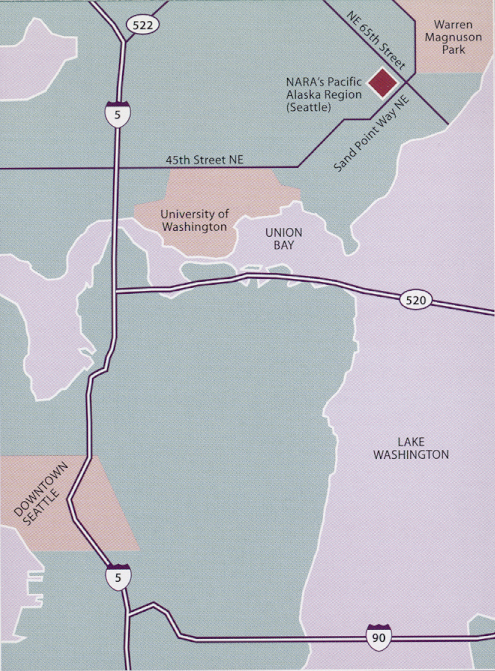
6125 Sand Point Way NE
Seattle, WA 98115